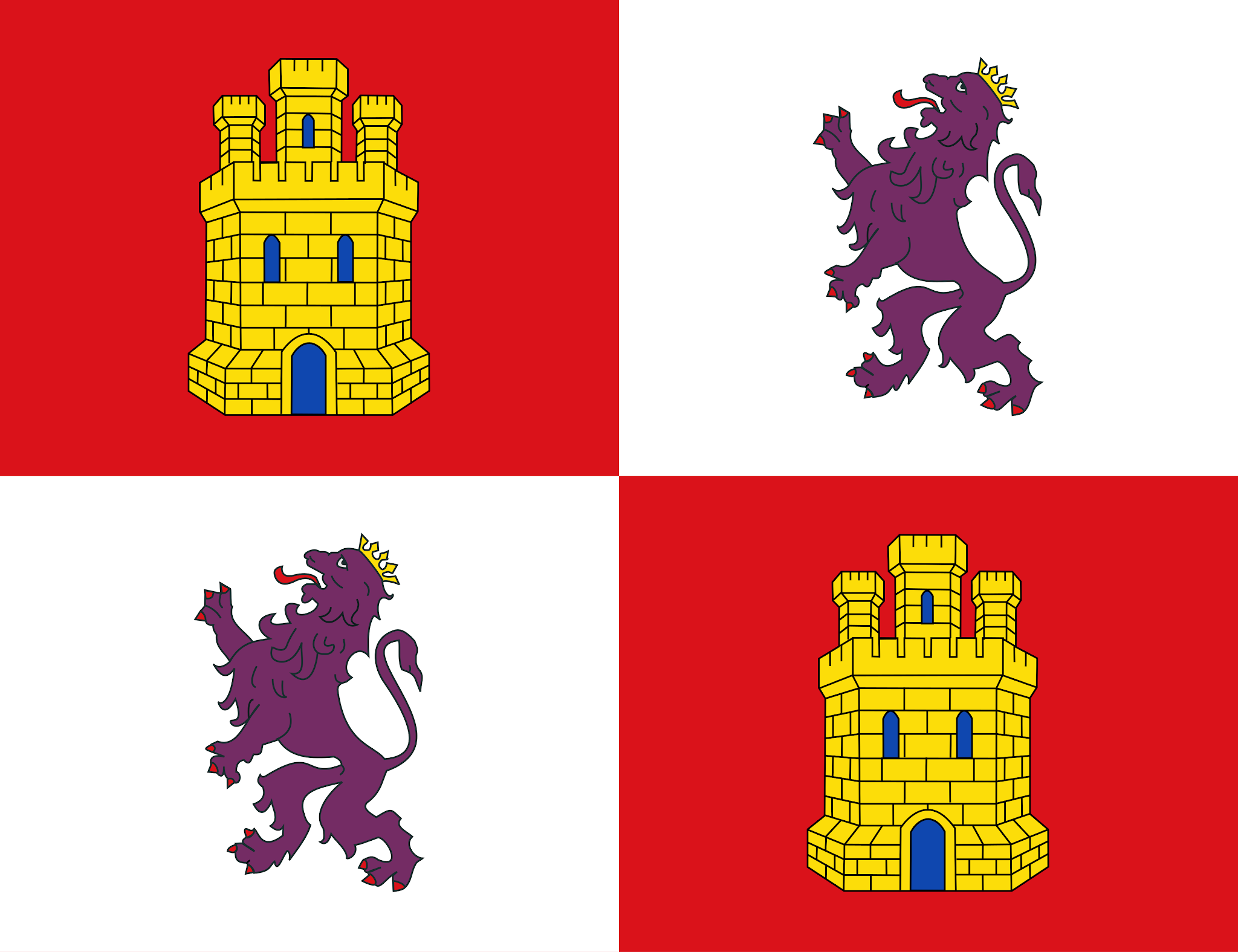
In 1513, Spanish explorer Juan Ponce de León came ashore in Florida and claimed the land for Spain. With that act, the Lions and Castles banner becomes one of the earliest European flags raised on soil that, centuries later, will be part of the United States.
Fifty-two years later, in 1565, Pedro Menéndez de Avilés founded St. Augustine — today recognized as the oldest continuously occupied European-established city in the nation.
The flag announces that these expeditions act for Queen Isabella I of Castile and King Ferdinand II of Aragon. Their authority stretches across the ocean. Their reach now touches this shore.
The famous design is a map in symbols. Every animal, tower, and stripe tells who rules and why. To those who watch it rise, the meaning is unmistakable: Spain claims this place.
A golden castle stands for Castile. A fierce lion represents León, honoring an ancient kingdom. Red and gold stripes recall Aragon. Separate realms, stitched into one powerful monarchy.
To European eyes, planting the banner transforms geography into empire. Trade, settlement, faith, and conflict will follow, changing lives on both sides of the Atlantic.
There is still no United States.
No thirteen colonies.
No stars and stripes.
But a message has arrived ahead of them all.
Spain is here.